
Wall Bay Snorkeling Guide: Nusa Penida's Vertical Reef Experience
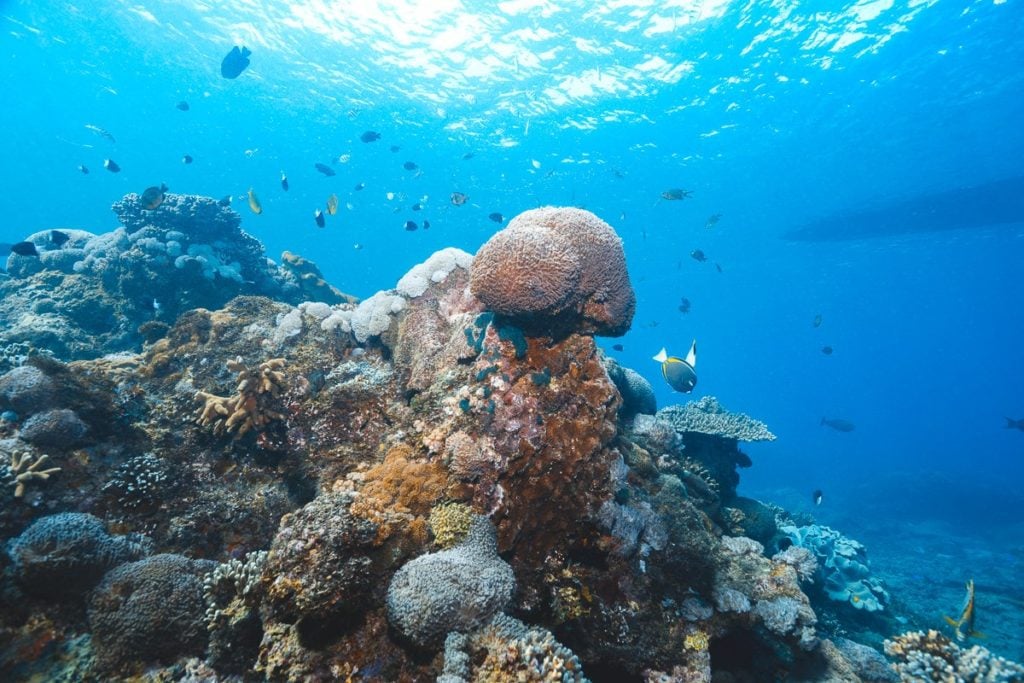
Wall Bay operates on a different current dynamic than any other snorkeling site around Nusa Penida. Here, the primary attraction does not rest on the bottom nor hover in mid‑water. It rises vertically from the depths—a near‑sheer volcanic cliff that drops forty meters and more, its face encrusted with gorgonians, black corals, and the occasional resting shark. To experience it properly requires drift technique, precise tidal timing, and a willingness to surrender to the ocean's flow.
🦈 Advanced Drift Snorkeling For Experienced Guests
White‑tip reef sharks, giant trevally, and a vertical wall of coral. Not a beginner site. Guides manage current safely.
Book An Advanced-Guide Tour →Experienced operators who run this site know that Wall Bay distinguishes capable ocean swimmers from the rest. The current does not pause for hesitation. It does not ease for those who tire quickly. Snorkelers who fight the flow exhaust themselves within minutes; those who read the water correctly and drift passively witness one of Nusa Penida's most dramatic underwater landscapes.
This guide consolidates the knowledge accumulated over hundreds of site assessments. Adhering to the recommendations below will prepare any visitor for a safe, productive drift along the wall.
Location & Geological Context
Wall Bay sits on the southeastern coast of Nusa Penida, approximately fifteen minutes by boat from Toyapakeh harbor. The site derives its name from the submerged cliff that parallels the shoreline for roughly two hundred meters before grading into a sloping reef. This wall is not a coral construction but rather the exposed face of ancient volcanic flows—basalt columns formed during the island's fiery geological past.
The wall drops vertically from five to seven meters at its crest down to beyond forty meters, at which point visibility from the surface diminishes. Snorkelers remain along the upper twenty meters of the wall, where coral coverage is thickest and light penetration sufficient to reveal the wall's intricate topographies.
Currents flow parallel to the wall's face, accelerated by the constriction between the cliff and the open channel beyond. This unidirectional flow—reversing with the tide—creates the drift conditions that define the site.
🗺️ Combine Wall Bay With Other Advanced Spots
Manta Point, Gamat Bay, and Wall Bay in a single day. The complete advanced itinerary.
Book The Advanced Safari →Optimal Timing & Tidal Dependency
Dry season (April through October) provides the most reliable conditions. Southeast trade winds push surface water consistently, generating predictable current direction and speed. Visibility during these months routinely reaches fifteen to twenty meters, sufficient to discern wall details and identify species at depth.
Slack tide windows are non‑negotiable at Wall Bay. Current speeds drop significantly during the hour surrounding high and low tide transitions. These slack water periods—sometimes lasting only twenty to thirty minutes—create a manageable drift. Guides schedule arrivals specifically for these windows. Departing outside slack tide results in currents too swift for safe or enjoyable snorkeling.
Morning arrivals consistently outperform afternoon visits. Prevailing current patterns typically strengthen after midday. Early departures (8:00 AM to 9:00 AM) coincide with more favorable tide phases and calmer surface winds. Afternoon trips frequently face cancellation when wind speeds exceed safe thresholds.
Consult wind forecasts before committing. Wall Bay becomes hazardous when trade winds exceed fifteen knots. Wave action pushes snorkelers against the wall. Current speed can double. Reputable guides cancel marginal trips without hesitation.
Marine Life Assemblage
Triaenodon obesus – Whitetip reef shark. The most frequently observed shark species along the wall. Individuals reach one to two meters in length. They spend daylight hours resting on sandy ledges or inside crevices, emerging to hunt at night. Snorkelers spot them lying motionless on flat surfaces or slowly cruising near the wall's edge. They show no aggression toward humans.
Caranx ignobilis – Giant trevally. Silver predators that patrol the wall's drop-off, preying on smaller reef fish. Individuals exceed one meter in length. Their speed and power become evident when they launch ambushes on unsuspecting prey. Snorkelers see them as dark, torpedo‑shaped silhouettes moving against the current.
Sphyraena barracuda – Great barracuda. Solitary adults often hover in mid‑water near the wall. They measure up to 1.5 meters. Their silver bodies, underslung jaws, and direct gaze make identification straightforward. They observe snorkelers with evident curiosity but maintain distance.
Gorgonian corals and black corals. The wall's vertical face hosts extensive colonies of sea fans (genus Gorgonia) and antipatharian black corals. These suspension feeders orient their branches perpendicular to the prevailing current, maximizing plankton capture. Their intricate latticework creates habitat for tiny commensal organisms.
Encrusting sponge communities. Bright orange and yellow tube sponges attach to bare rock surfaces where coral cannot gain a foothold. Their role as filter feeders contributes to the wall's overall biological productivity.
🐋 Reliable White‑Tip Shark Sightings
Wall Bay offers the highest probability of seeing reef sharks among all Nusa Penida snorkeling sites.
Book A Shark‑Focused Tour →Current Dynamics & Drift Technique
Wall Bay features a unidirectional current that flows parallel to the wall's face. Direction depends on tide stage. Incoming tide pushes water north to south. Outgoing tide reverses the flow. Speed ranges from one to three knots, influenced by wind strength and tidal range.
The correct technique proceeds as follows: enter the water at the up‑current end of the wall, achieve neutral buoyancy (or float passively with a life jacket), and allow the current to transport you along the wall's length. Do not swim against the flow. Do not attempt to stop. Use fins solely for steering—gentle adjustments to move closer to the wall or farther from it.
The boat follows your drift path. The captain maintains position down‑current of the snorkelers. When you reach the end of the wall, signal the boat. The captain approaches, you climb aboard, and the driver returns to the starting point for another pass.
Two or three drift passes typically exhaust the site's value. Each pass lasts fifteen to twenty minutes. Remaining in the water longer risks fatigue and accelerated heat loss.
Equipment & Preparation
Life jacket – mandatory. Currents at Wall Bay can separate a snorkeler from their group in seconds. A brightly colored life jacket increases visibility to the boat. Wear it correctly. Inflate it fully. Treat this as non‑negotiable.
Exposure protection. Water temperature ranges from 24 to 27 degrees Celsius. Drift technique keeps the body stationary relative to moving water, which accelerates heat loss. A 3mm shorty wetsuit or full‑length rash guard provides adequate insulation.
Properly fitting fins. Secure fins are essential. Open‑heel fins with adjustable straps outperform full‑foot pocket fins. Practice finning technique before arrival; inefficient kicking leads to rapid fatigue.
Surface marker buoy (SMB). Operators provide these devices. The SMB makes snorkelers visible to other boats in the channel. Deploy it before each drift. Your guide will demonstrate proper inflation technique.
Wide‑angle camera setup. The wall's scale requires wide coverage. A GoPro in SuperView mode suffices. A compact camera with a 24mm equivalent lens produces better results. Leave macro lenses on the boat.
Code Of Conduct
- Stay with your group. The current separates people rapidly. Maintain visual contact with your guide and other snorkelers. Use the SMB as a rallying point.
- Do not touch the wall. Coral and gorgonians cover every surface. Contact damages decades of growth. If current pushes you toward the wall, use fins to maintain distance.
- Avoid chasing marine life. White‑tip sharks retreat into ledges when pursued. Trevally accelerate away. Observe from a respectful distance.
- Signal fatigue immediately. Raise one arm above your head. Wave slowly. The boat will approach and retrieve you. Do not wait until exhaustion sets in.
What Experienced Snorkelers Understand
Look deeper than the surface. The most interesting marine life often rests just below casual observation range. Peer into crevices. Check shaded ledges. That is where the sharks rest.
Monitor current shifts. Slack tide windows pass quickly. When current speed increases, drift duration shortens. Maximize each pass by staying alert and keeping your face in the water.
Position yourself close to the wall. Snorkelers who drift too far from the wall see less marine life. The current carries you faster in open water than near the wall's face. Consciously steer toward the rock.
Schedule with the charter calendar. Wall Bay receives fewer visitors than Manta Point or Crystal Bay. Morning visits often mean sharing the site with only one or two other boats. Afternoons may find you alone.
🏝️ Prefer Calmer Conditions?
If Wall Bay seems overly demanding, consider our island‑pickup tours focusing on Crystal Bay and Gamat Bay.
Book A Calm‑Water Tour →Troubleshooting Common Issues
Current feels too strong. Hold your guide's hand or grasp the tow line if provided. Riding the current requires no swimming effort. Relax and let it carry you.
Cannot see the wall clearly. Visibility occasionally drops after heavy rain. Shift focus to the mid‑water column where barracuda and trevally hunt.
Feeling seasick before the drift. Wall Bay's location exposes boats to open ocean swell. Motion sickness medication taken one hour before departure prevents most issues.
Mask fogging during the drift. Apply anti‑fog solution before entering. Remove moisture from the mask skirt before donning. Prevent fogging before it starts.
Frequently Asked Questions
"Do I need previous drift snorkeling experience?" Previous experience helps but is not mandatory. Guides provide a thorough briefing and remain in the water throughout the drift. Listen carefully and follow instructions.
"What happens if I get separated from the group?" Deploy your SMB immediately. The boat captain maintains visual contact with the drifting group and will retrieve you. Do not attempt to swim back against the current.
"Can children snorkel Wall Bay?" Children under twelve generally should avoid this site. The current strength and depth intimidate even some adults. Guides make case‑by‑case assessments based on swimming ability and comfort level.
"How does Wall Bay compare to Manta Point?" Manta Point offers pelagic action in open water. Wall Bay provides a vertical reef encounter. Manta Point features stronger currents but shallower depth. Wall Bay requires more precise timing but rewards with different marine life.
"Is Wall Bay worth visiting if Manta Point is already on my itinerary?" Yes. The two sites complement each other perfectly. Manta Point delivers the mantas. Wall Bay delivers sharks, trevally, and the dramatic wall. Book a multi‑spot tour that includes both.
⚡ Add Wall Bay To Your Express Tour
Combine Wall Bay with the morning express trip. Half day covers two advanced sites efficiently.
Book Express + Wall Bay →Final Recommendations
Wall Bay rewards those who prepare properly and respect its conditions. The current will carry you. The sharks will watch you. The wall will drop away beneath you. None of it happens quickly. None of it happens without effort.
Book during dry season. Check tide charts. Arrive early. Wear a life jacket. Stay close to your guide. Keep your face in the water. And when the current takes hold and the wall scrolls past, appreciate that you are experiencing one of Nusa Penida's most advanced snorkeling sites—a place where the ocean demonstrates its power and beauty simultaneously.